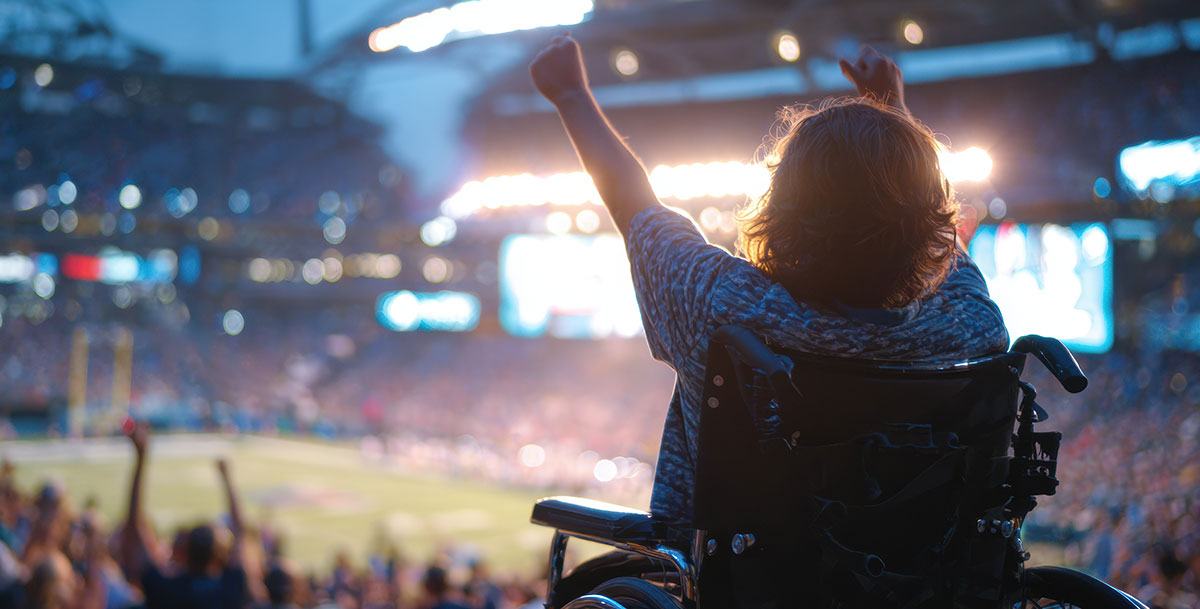
A Case Study from Michigan Stadium
Sports have the power to bring people together. They create memories, friendships, and a sense of belonging. But for too long, that sense of connection was missing for many people with disabilities when attending major sporting events. My work in disability advocacy has always been about changing that, making sure everyone has a fair chance to enjoy life’s experiences. One of the projects closest to my heart was improving accessibility at Michigan Stadium, one of the largest stadiums in the country.
Seeing the Problem Clearly
When the Michigan Paralyzed Veterans of America approached me in 2007, we were facing a major barrier. Michigan Stadium, even with its storied history and massive size, simply did not provide enough access for people who use wheelchairs. There were fewer than 100 wheelchair seats in a venue that welcomed well over 100,000 fans. Those seats were isolated in end‑zone sections, and beyond that there were problems with parking, restrooms, paths, and concessions that made attending a game far more difficult than it should have been.
This was not just about seats. It was about dignity. It was about inclusion. And it was about the simple idea that every fan should be able to cheer for their team with comfort and pride.
Taking Action Through the Americans with Disabilities Act
Under the Americans with Disabilities Act, public spaces must be accessible to everyone. But the law alone is not enough if it is not enforced in real life. The Michigan Paralyzed Veterans of America filed a complaint against the University of Michigan because the stadium’s renovation, though aimed at creating an incredible fan experience, did not meet the true spirit of accessibility.
The Department of Justice joined the case and ultimately a consent decree was signed in 2008. This agreement required the stadium to build seating that was truly accessible, distributed throughout the venue and paired with companion seats so that friends and family could sit together.
Transforming the Fan Experience
Starting with the 2008 football season, Michigan Stadium added 96 new wheelchair‑accessible seats with companion seating along the east sideline. These seats were placed in areas with great visibility and included accessible routes in and out of the seating bowl.
By the start of the 2010 season, the work expanded to include at least 329 accessible wheelchair seats with companion seats in a variety of locations around the stadium. That change made a world of difference for fans who previously had very limited options.
Beyond the seats, the stadium’s upgrades included accessible parking, accessible routes from parking areas to entrances, improved restrooms, and better access to concessions and amenities. All of this meant that people with disabilities could enjoy the game day experience with dignity and ease.
More Than Seats, It is Access to Life
What this settlement did was more than add places to sit on game day. It opened the door for people with disabilities to be part of their community in a way that too often was missing. It allowed parents to bring children to games, veterans to celebrate with friends, and families to share moments that most of us take for granted.
I heard from people who said for the first time they felt truly included. They could sit where they wanted. They could move around the stadium. They could get food and drinks without struggling and being left behind. Those may sound like small things, but they make life fuller. They make memories possible.
Setting a Model for Other Venues
The changes at Michigan Stadium now serve as an example for other venues across the country. It shows what can be done when institutions take accessibility seriously and when advocates stand up for equal access and inclusion.
I have always believed that public spaces should be welcoming to everyone. Sports, in particular, have a way of uniting people. It is a shame when anyone is left out, not because they lack passion or spirit, but because the design around them was not thoughtful or inclusive. What we did in Ann Arbor proved that progress is possible.
The Heart of the Work
My work in disability advocacy has been driven by a core belief: access changes lives. When people with disabilities are included in public life, they enrich our communities. When we break down barriers, everyone benefits.
The improvements at Michigan Stadium are more than architecture and seating. They are symbols of our shared commitment to fairness, respect, and opportunity. They remind all of us that inclusion matters. Every person deserves a place where they can cheer, celebrate, and feel the joy and energy of a live sporting event.
Continuing the Mission of Inclusion
The success at Michigan Stadium inspires me to continue fighting for change in other arenas, public spaces, and communities. Accessibility should be a standard, not an afterthought. Every new public venue, every renovation, is an opportunity to create spaces that welcome everyone.
Sports can inspire, but inclusion transforms. When every fan can participate fully, the experience becomes richer for all of us. Accessible public spaces are not just a legal requirement. They are a moral and social commitment that strengthens our society and makes life better for everyone.